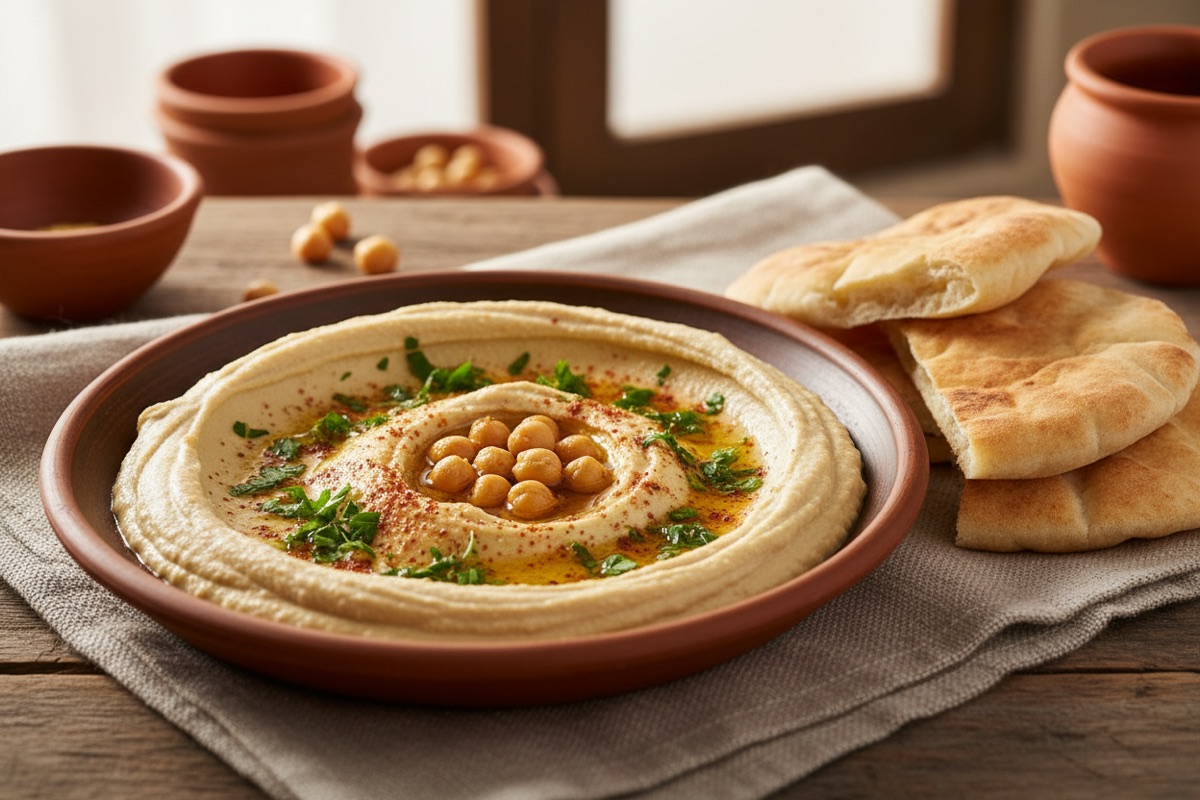
Hummus — country by country
The chickpea and tahini classic every country claims as its own.
Every country brings its own touch. Here's how they differ.
⚔️ Head to head
Pick two kitchens and see exactly where they part ways.
🇱🇧 Lebanon
✨ Extra-smooth texture from peeled chickpeas and a high tahini ratio, finished with olive oil and paprika.
Only in Lebanon
- garlic
- extra virgin olive oil
- paprika and parsley, to garnish
🇵🇸 Hummus / Musabbaha
✨ Served warm and chunky (musabbaha style) with whole chickpeas, cumin, and a fiery shatta on the side.
Only in Palestine
- garlic, crushed
- ground cumin
- olive oil
- green chili shatta, to serve
🤝 Both use
- dried chickpeas, soaked overnight
- tahini
- lemons, juiced
- salt
🇱🇧 Lebanon
⏱ 60 minIn Beirut, hummus is judged by its silkiness — peeled chickpeas, plenty of tahini, and a pool of olive oil.
✨ What makes it special
Extra-smooth texture from peeled chickpeas and a high tahini ratio, finished with olive oil and paprika.
🇵🇸 Palestine
⏱ 60 minKnown here as: Hummus / Musabbaha
Palestinian kitchens love musabbaha — hummus left chunky, warm chickpeas folded through the tahini sauce.
✨ What makes it special
Served warm and chunky (musabbaha style) with whole chickpeas, cumin, and a fiery shatta on the side.
🇸🇾 Syria
⏱ 60 minDamascus serves hummus with a lighter tahini touch and a signature topping of browned pine nuts in butter.
✨ What makes it special
Topped with pine nuts toasted in ghee; often served alongside fattet hummus for breakfast.
🇯🇴 Jordan
⏱ 55 minJordanian hummus leans rustic — thicker, garlickier, and often crowned with cumin-spiced ful.
✨ What makes it special
Thick, garlicky, and often served as “hummus bil-ful” with warm fava beans on top.
🇪🇬 Egypt
⏱ 50 minIn Egypt, hummus often meets the street: warmed, spiced with cumin, and served looser as a dip for everything.
✨ What makes it special
Cumin-forward and served warm; in winter it becomes “hummus el-sham,” a spiced drinkable chickpea broth.